
"coffee planting statistics"
900 article(s) found

Statistical Analysis report of Coffee consumption in China in 2014
According to the statistics of authoritative departments, at present, the annual growth rate of coffee consumption in China is 10% and 15%.

According to statistics, the output value of Taiwan's coffee-related industries reached 60 billion yuan-LOUISA Louis in the past 10 years.
Over the past decade or so, Taiwan has gradually formed the habit of drinking coffee, especially after Starbucks officially entered Taiwan in 1998. Convenience stores joined the war in 2005. Since then, there have been a large number of coffee shops and more and more people drinking coffee. The total number of coffee shops in Taiwan has also exceeded 2,000. According to the survey, CITY CAFE leads the way, with an annual turnover of more than 10 billion yuan, while Starbucks also has 8.

Introduction of special sweet Panamanian boutique coffee bean manor producing area flavor and taste variety
According to the statistics of the Food and Agriculture Organization of the United Nations, the coffee production in this country is 10100 tons, accounting for about 2013 of the world's production. [8] this is a yield of 4509 hectograms per hectare planted on an area of 22400 hectares (55000 mu). [8] Coffee production statistics period from 1961 to 2015 indicates a low of 1961 1985 1422 tons, 510 tons and 2014 tons. [9] is called

Coffee is the No. 1 crop in global trade. Ranking of coffee production and consumption
Exchange of professional baristas Please pay attention to Coffee Workshop (Wechat official account cafe_style) Coffee is the No. 1 item in world crop trade volume, surpassing rice and wheat, while the world's largest coffee producer is Brazil, the largest consumer is the United States, and Finland has the highest coffee consumption per person, with an average of 4 to 5 cups of coffee per person per day. Author = Choi Rongxia (Korean)

"Made in Yunnan" coffee breakthrough "original bean extraction" technology into the market
According to statistics, by the end of 2016, Yunnan coffee planting area exceeded 1.8 million mu, 2016/2017 production season, Yunnan coffee production is expected to reach about 150,000 tons, Yunnan coffee planting area and output accounted for more than 98% of China; and the world coffee production in this production season is about 8.879 million tons, Yunnan coffee accounts for about 1.7% of the global total output. Among the many coffee companies in China, Hougu Coffee

Vietnam fine coffee beans Vietnam cat shit coffee?
According to the statistics of Vietnam Coffee Association, in 2000-2001 (from October 2000 to September 2001), Vietnam exported 874676 tons of coffee from 149 enterprises, among which the three largest exporters were OLAM Company (foreign-owned enterprise, 21326 tons), DAKMAN Company (joint venture, 18076 tons) and Vinafimex Company (local enterprise, 13719 tons). Vietnamese coffee

The challenge of developing coffee industry in Nicaragua
According to official sources, Nicaragua will convene an international research conference on the 18th to examine the various challenges faced by the country's coffee industry. The local official media reported that this activity, named the first international competition of "the Challenge of the Coffee Industry," will invite experts from Brazil and Guardia to participate. According to official statistics, Nicaragua in the last harvest year (201)

Where do coffee beans usually come from?
[guide] the coffee we drink comes from the roasting and grinding of coffee beans, and all this is provided by magical coffee bars. The origin of this economic crop is in Yisuobi in Africa. It has been cultivated for more than 2000 years. At present, the main coffee producing areas in the world are Latin America, Africa and Africa. According to statistics, coffee is cultivated in 76 countries in the world, mainly from coffee.

Full-bodied fragrant Indonesian Mantenin boutique coffee bean flavor and taste introduction to the planting environment
According to the statistics of Indonesia's Ministry of Energy and Mines (2013), Indonesia has coal reserves of about 58 billion tons, of which 19.3 billion tons have been proven, of which 5.4 billion tons are commercially recoverable reserves. As there are still many areas with unproven reserves, the Indonesian government estimates that the total coal reserves will reach more than 90 billion tons. Indonesia has huge natural gas reserves, about 123,589 trillion cubic meters.

Introduction to the planting environment of Manor Manor with strong spice flavor and Indonesian Manning coffee flavor
According to the statistics of Indonesia's Ministry of Energy and Mines (2013), Indonesia has coal reserves of about 58 billion tons, of which 19.3 billion tons have been proven, of which 5.4 billion tons are commercially recoverable reserves. As there are still many areas with unproven reserves, the Indonesian government estimates that the total coal reserves will reach more than 90 billion tons. Indonesia has huge natural gas reserves, about 123,589 trillion cubic meters.

Follow the heir to explore the Korean popular coffee shop
Recently, a wave of successors has swept the world, according to incomplete statistics, about 400 million people around the world are chasing the South Korean TV series "successors." This is a series of sweet, moving, rampant romance stories that tell the story of a series of sweet, moving, rampant romances around the extremely ordinary and poor heroines of 0.1% of the Korean elite. Recently, a wave of successors has swept the world. According to incomplete statistics, there are about 400 million people around the world.
Coffee acreage in Madagascar continues to decline
Due to the continuous decline in coffee prices in the international market, the planting area of Malagasy coffee continues to decrease. The latest statistics from the Malaysian Ministry of Agriculture show that the planting area of Malagasy coffee is 190000 hectares, nearly 30,000 hectares less than 20 years ago. At present, coffee is still an important export product for horses. Malaysia produces an average of 67000 tons of coffee a year, with nearly 40000 tons for export. An important export of Malaysian coffee
Shade planting Coffee: Shade Grown
If you pay close attention to it, some raw bean sacks will be marked with the word Shade Grown, and most of them will be shaded and planted in Chinese. The so-called shade planting refers to the most praised Arabica species among the coffee varieties. The output of this variety accounts for 60% to 70% of the statistics of global coffee production, and is considered to be a coffee with excellent flavor that can be tasted carefully. Relative to Robes.
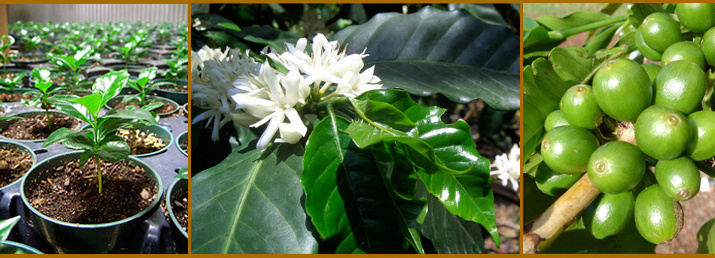
How to plant coffee trees, how to
If you pay careful attention, the words ShadeGrown will be marked on some raw bean sacks, or in some more serious introductions of raw beans, which are mostly translated into Chinese for shade planting. The so-called shade planting refers to the most praised Arabica species of coffee varieties, which accounts for six to seven percent of the global coffee production statistics.

Introduction to the characteristics of Fine Coffee beans with strong Flavor Flavor in Indonesia
According to the statistics of Indonesia's Ministry of Energy and Mines (2013), Indonesia has coal reserves of about 58 billion tons, of which 19.3 billion tons have been proven, of which 5.4 billion tons are commercially recoverable reserves. As there are still many areas with unproven reserves, the Indonesian government estimates that the total coal reserves will reach more than 90 billion tons. Indonesia has huge natural gas reserves, about 123,589 trillion cubic meters.

Boutique Coffee beans: an introduction to "Shade planting" Coffee Shade Grown
If you pay close attention to it, some raw bean sacks will be marked with the word Shade Grown, and most of them will be shaded and planted in Chinese. The so-called shade planting refers to the most praised Arabica species among the coffee varieties. The output of this variety accounts for 60% to 70% of the statistics of global coffee production, and is considered to be a coffee with excellent flavor that can be tasted carefully. Relative to Robes.

Global coffee producing area China's coffee producing area
Coffee trees are also planted in China. However, since there are no production statistics, no one knows for sure how many coffee trees there are in China and how much coffee they can produce. Coffee producing areas in China: at present, gourmet coffee has been successfully grown in Taiwan, Yunnan and Hainan, which shows that the coffee industry can prosper in the region for a long time. The characteristics of Chinese coffee: flavor: affected by

Global Coffee producing area-the characteristics of Chinese Coffee
Coffee trees are also planted in China. However, since there are no production statistics, no one knows for sure how many coffee trees there are in China and how much coffee they can produce. Coffee producing areas in China: at present, gourmet coffee has been successfully grown in Taiwan, Yunnan and Hainan, which shows that the coffee industry can prosper in the region for a long time. The characteristics of Chinese coffee: flavor: affected by
Coffee industry springing up in Ninger, Yunnan
Since the introduction, development and cultivation of small-grain coffee in Ning'er County, Yunnan Province in 1989, it has become another important channel to increase agricultural efficiency and increase farmers' income. According to statistics, the output of coffee beans in the county reached 4500 tons in 2010, with an output value of 113 million yuan.

Introduction to the Export and sales of Colombian Coffee Lazmus Manor
Colombia is one of the most important coffee exporters in the world. According to the statistics of the International Coffee Organization, Colombian coffee exports accounted for an average of 17% of the world's total coffee exports in 1991 and 1996, second only to Brazil (24% of the world's total exports). In 1998, the total coffee exports of the member states of the organization were 79.5 million bags, of which Brazil accounted for 22.9%, Colombia 14.2% and Vietnam 8.1%.